Sohar Real Estate Guide: Industrial Growth and Property Investment Opportunities
September 26, 2026
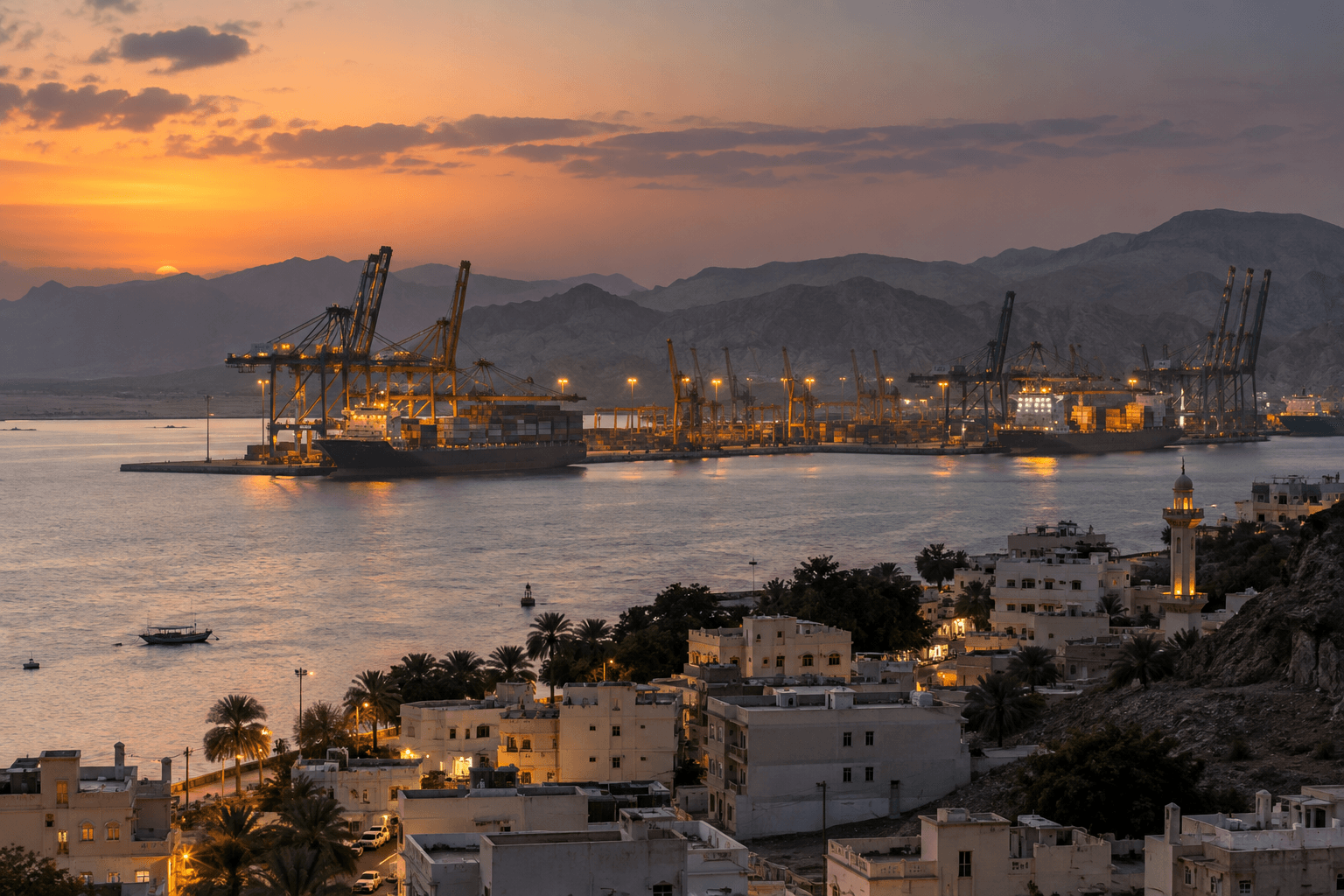
Sohar doesn't get mentioned in the same breath as Muscat or Salalah when people talk about Oman real estate, and that's largely because its economy runs on a different engine entirely: one of the region's largest deep-water ports, a sprawling free zone, and heavy industry rather than tourism or lifestyle marketing. That makes Sohar a genuinely different kind of property market — one built around workforce housing, logistics land, and a newer, smaller freehold pocket along the coast — rather than a scaled-down version of the freehold communities further south. For buyers willing to look past the absence of a marketing campaign, it's also one of the more underpriced corners of the country relative to its actual economic weight.
What's Driving Demand in Sohar
The Port of Sohar is one of the largest deep-water ports in the Middle East, built specifically to handle bulk cargo, container traffic, and the industrial output of the free zone that surrounds it. The Sohar Freezone hosts a mix of petrochemical, metals, and logistics tenants, anchored by major operations like Sohar Aluminium — one of the largest aluminium smelters in the world — alongside a growing base of manufacturing and warehousing companies drawn by the port access and free-zone incentives.
None of that is tourism-driven, and that's the point: Sohar's housing demand tracks industrial employment, not visitor numbers. Engineers, plant managers, logistics staff, and their families relocate here for multi-year postings tied to specific employers, which creates steady, if less headline-grabbing, demand for both rental and owned housing near the port and free-zone access roads.
Sohar also sits inside Oman Vision 2040's broader push to diversify the economy away from oil and gas, with the free zone specifically positioned to attract downstream manufacturing and logistics investment. That government backing matters for anyone taking a longer view on the city — Sohar's growth case rests on continued industrial investment rather than a tourism campaign, which is a more predictable, if less exciting, kind of demand driver to underwrite a purchase against.
Property Types Available
The Sohar market splits into a few distinct categories rather than one uniform product. Family townhomes and villas aimed at relocating professionals sit closer to the city's residential districts, generally offered as long-term leases or, where zoning allows, freehold sale. Separately, industrial land plots inside the Sohar Freezone are bought by businesses and investors directly — zoned for manufacturing, storage, or logistics use, with road access and utility connections already run to the plot boundary, aimed at companies setting up operations rather than residential buyers.
More recently, Sohar has gained a genuine freehold residential community on the coast — beachfront townhouses and villas marketed to the same international buyer pool that looks at Al Mouj or Hawana Salalah, a sign that the city's real estate story is starting to broaden beyond pure industry. It's a smaller, newer offering than the established Muscat and Salalah communities, but it matters: it's the first sign of Sohar competing for lifestyle-driven freehold buyers rather than only workforce and industrial demand.
Apartment stock is comparatively limited in Sohar compared to Muscat — most of the market leans toward townhouses and villas suited to relocating families rather than the studio-and-one-bedroom apartment product that dominates Muscat's freehold towers. That's worth knowing if you're used to benchmarking against Muscat pricing per square metre, since the product mix itself is different, not just the price level.
Freehold, Usufruct, or Long Lease? Check the Zone
This is the single most important thing to get right before buying in Sohar. Foreign freehold ownership in Oman is only available inside government-approved Integrated Tourism Complexes, and historically most of Sohar's residential stock — built around the port and free zone rather than a tourism masterplan — sat outside that framework, meaning it was available to foreign buyers only as usufruct or long-term lease, if at all, with much of the general housing market oriented toward Omani nationals and corporate leasing.
The newer beachfront freehold community changes that picture for one specific pocket of the city, but it doesn't change it citywide. Don't assume a Sohar listing is freehold just because a comparable Muscat or Salalah project would be — confirm the exact ownership structure and ITC status of the specific development before treating the numbers the same way you would for an established freehold zone. Our freehold vs usufruct guide covers what the distinction actually means for a buyer in practice.
Rental Demand: Corporate and Workforce Housing
Sohar's rental market is driven overwhelmingly by corporate and workforce demand rather than the individual tenant market that dominates Muscat. Employers in the free zone frequently lease housing directly for relocating staff, which means multi-year, corporate-backed leases are common and can offer more stability than an individual residential tenancy — but also means the pool of prospective tenants is tied tightly to the hiring cycles of a relatively small number of large employers, rather than a broad, diversified renter base.
That concentration shows up in the yield picture too. Sohar generally trades more on stability and occupancy consistency than on the kind of high headline yields Muscat's better freehold addresses can produce — a more utilitarian return profile than a lifestyle one. Our rental yields guide puts Sohar's numbers in context against Muscat and Salalah specifically.
Getting To and Around Sohar
Sohar sits roughly two-to-three hours north of Muscat by car along a well-maintained coastal highway — close enough that some owners commute or visit regularly rather than treating it as a remote holding the way Duqm or far southern Dhofar might be. Sohar has its own domestic airport, though scheduled service is limited compared to Muscat International, so most visiting buyers and owners still drive or connect through Muscat.
Within the city, the free zone and port sit on the coast north of the main urban area, with residential districts and the newer beachfront community spread along the shoreline further south. A car is essential for daily life here, as it is in most of Oman outside central Muscat.
Financing and Ownership Costs
Where a Sohar property qualifies as freehold, the national cost framework applies the same way it does anywhere else in Oman — registration fees, agency commissions, and the other line items covered in our true cost of buying guide. Mortgage financing is available through the same banks active in Muscat, though foreign buyers should confirm early that a specific Sohar development is on a given lender's approved list, since fewer Sohar projects have the track record and unit volume that make banks comfortable financing at scale — see our mortgage guide for what lenders typically look for.
For industrial land purchases specifically, financing usually runs through commercial/business lending channels tied to the buyer's operating company rather than a personal residential mortgage — a different process worth discussing with a bank or the Sohar Freezone authority directly rather than assuming it mirrors a residential purchase.
How Sohar Compares to Duqm and Salalah
Among Oman's three secondary freehold markets, Sohar is the most industrially grounded. Duqm shares the "long-horizon, infrastructure-led" character but is earlier-stage and further from Muscat; Salalah shares the coastal-freehold format but is driven by tourism seasonality rather than industrial employment. Sohar sits between the two in practice — more built-out and closer to Muscat than Duqm, but without Salalah's tourism upside or khareef-season rental spike. That middle position is exactly why it suits a specific, narrower buyer profile rather than a broad audience: it rewards patience and a clear-eyed read of the free zone's growth trajectory more than it rewards a lifestyle purchase.
Who Sohar Suits
Sohar isn't the right fit for a buyer chasing a vacation property or a khareef-season retreat — that's Salalah's and, in a different way, Al Mouj's territory. It suits two fairly specific buyer types instead: investors targeting industrial-adjacent housing or logistics land as a long-horizon, income-and-appreciation play tied to the free zone's continued growth, and companies or investors buying land directly for their own operations rather than as a passive real estate holding.
For buyers specifically interested in the new beachfront freehold pocket, treat it as an early-stage lifestyle community rather than an established one — meaningful upside if it develops the amenity base of a mature ITC over time, but currently a much smaller, less liquid market than Al Mouj or Hawana Salalah, and worth touring in person rather than judging from renders alone. Either way, go in with a clear sense of which of these two buyer profiles you actually are before you start comparing specific units.
Sohar is a market for buyers who understand exactly what they're buying into — industrial-cycle housing demand, logistics land, or an early-stage coastal community — rather than a general freehold alternative to Muscat. This guide is general information based on publicly available details about the city and its property market, not a substitute for touring specific units and confirming current pricing and availability, and for zoning specifics we'd always recommend confirming directly with a licensed agent. Browse current Sohar listings or get in touch to ask about the market there specifically.
More From the Blog
September 26, 2026
Jebel Sifah and Muscat Bay: Oman's Emerging Luxury Coastal Communities
Beyond Al Mouj and Muscat Hills, these two ITC-zoned marina communities south of the city are where a quieter, more resort-style buyer pool is looking.
September 26, 2026
Inheritance and Property Law in Oman for Foreign Owners
What happens to a freehold property in Oman if the owner passes away — and the estate planning steps that prevent it from becoming complicated for your family.
September 26, 2026
Short-Term Rental and Airbnb Regulations for Property Owners in Oman
Turning a freehold unit into a short-let earns strong khareef and tourism-season income — but only if it's licensed correctly. Here's the framework.